
Choosing the right school uniform manufacturer directly affects uniform quality, student comfort, sizing consistency and whether the school can maintain the same appearance across multiple academic years. Price alone is not enough to evaluate a supplier. This guide covers seven key criteria for choosing a reliable school uniform manufacturer, along with the questions schools should ask before signing an agreement.
Why Choose a Manufacturer With School Uniform Experience?
- The same design may need to be reproduced for hundreds of students.
- Schools require wide size ranges.
- Colors must remain consistent across production runs.
- Uniforms may need to be reproduced in future seasons.
- Logo application must remain standardized.
- Delivery often has a fixed academic deadline.
- Fabrics need to withstand frequent wear and washing.
7 Criteria for Choosing a School Uniform Manufacturer
1. Relevant School Uniform Experience
Ask about previous projects, school clients and the types of garments the manufacturer has produced. Relevant capability matters more than the number of years a factory has simply been operating.
2. Fabric Quality
- Fabric composition.
- Weight.
- Feel.
- Breathability.
- Wash durability.
- Colorfastness.
- Climate suitability.
- Care requirements.
3. Custom Design Capability
- School colors.
- Garment cuts.
- Collars.
- Sleeves.
- School logos.
- PE garments.
- Summer options.
- Winter options.
4. Pre-Production Samples
A sample allows the school to review:
- Sizing.
- Fabric.
- Color.
- Stitching.
- Logo placement.
- Embroidery or printing.
- Finishing quality.
5. A Clear Sizing System
- Size charts.
- Available ranges.
- Fitting samples.
- Special sizes.
- Adjustment procedures.
- Exchange policies.
6. Production and Delivery Reliability
- Sample lead time.
- Production lead time.
- Manufacturing capacity.
- Final delivery date.
- Process for additional quantities.
7. A Detailed Quotation
- Fabric specification.
- Garments included.
- Quantities.
- Size requirements.
- Logo application.
- Packaging.
- Sample cost.
- Production timeline.
- Payment terms.
- Possible additional costs.
Manufacturer vs Distributor
| Area | Manufacturer | Distributor |
|---|---|---|
| Design control | High | Limited to available products |
| Custom sizing | Greater flexibility | Depends on stock |
| Fabric choice | Can be specified before production | Usually limited |
| Logo application | Integrated into production | Often added later |
| Large quantities | Well suited | Depends on inventory |
| Repeat production | Easier with saved specifications | Product availability may change |
What Services Can a School Uniform Manufacturer Provide?
- Uniform design development.
- Fabric recommendations.
- Color specification.
- Sample production.
- Size planning.
- Cutting and sewing.
- Printing or embroidery.
- Quality inspection.
- Packaging.
- Bulk supply.
- Repeat production.
Explore
Toli Uniform’s services
for school uniform design, manufacturing and supply.
What Makes a Good School Uniform Fabric?
- Softness.
- Breathability.
- Daily-wear durability.
- Wash resistance.
- Color retention.
- Ease of care.
- Seasonal suitability.
- Compatibility with printing or embroidery.
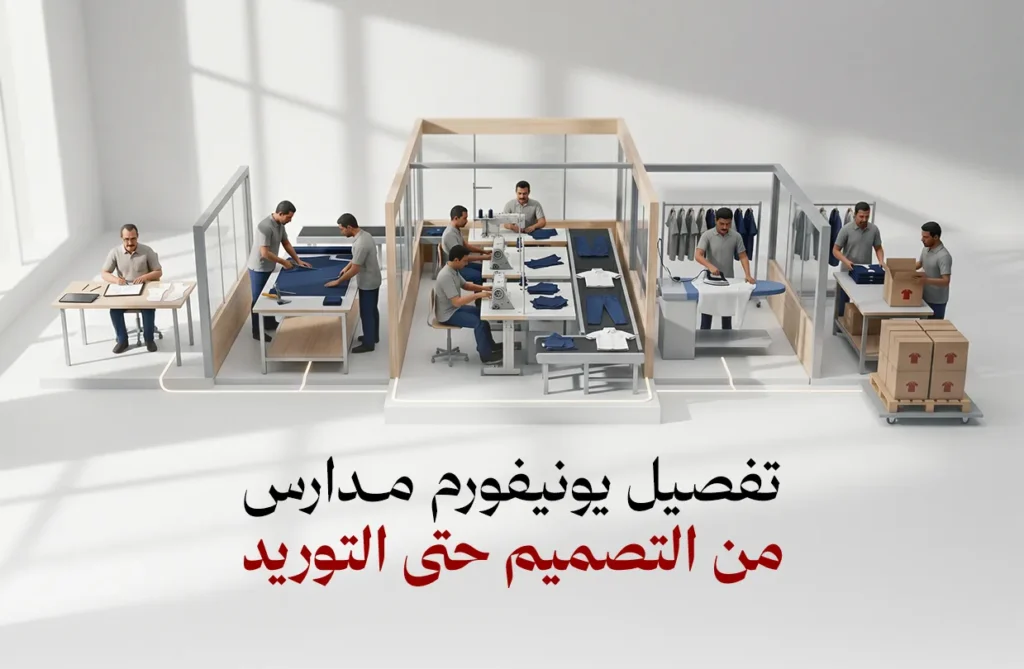
How Are School Uniforms Manufactured?
- Define garments and styles.
- Select fabrics and colors.
- Develop the design.
- Establish quantities and sizing.
- Produce a sample.
- Revise and approve the sample.
- Cut and sew the garments.
- Apply the school logo.
- Inspect quality.
- Package and deliver the order.
Read our
custom school uniform production guide
for more detail.
Questions to Ask Before Choosing a Manufacturer
- Can you produce a sample first?
- What is the exact fabric specification?
- Can we review fabric options?
- What is the minimum order quantity?
- How is sizing managed?
- Does the price include logo application?
- Does the price include packaging?
- How long does sample production take?
- What is the bulk production lead time?
- Can special sizes be produced?
- What is the alteration or replacement policy?
- Are all specifications documented?
Local Manufacturer vs Export Manufacturer
The label alone does not determine quality. Evaluate relevant experience, quality-control procedures, samples, production capacity, specification accuracy, communication and delivery reliability.
A specialized local manufacturer may be more suitable than a larger export manufacturer without relevant school-uniform experience, and vice versa.
How Can a School Get an Accurate Uniform Quote?
- Expected student numbers.
- Garments required per student.
- School stages or age groups.
- Size range.
- Reference designs.
- Required colors.
- Preferred fabric where known.
- Logo application requirements.
- Delivery deadline.
- Packaging requirements.
Common Mistakes When Choosing a School Uniform Manufacturer
- Selecting only on the lowest price.
- Failing to inspect fabrics.
- Starting production without a sample.
- Leaving specifications undocumented.
- Using age alone for sizing.
- Failing to confirm delivery dates.
- Skipping embroidery or print testing.
- Ignoring alteration policies.
- Failing to check repeat-production capability.
When Does an Annual Supply Agreement Make Sense?
- Additional quantities are needed throughout the year.
- New students regularly join the school.
- Fabric consistency needs to be maintained.
- Colors need to remain stable.
- Repeat orders must match previous batches.
- The school wants to reduce supplier sourcing every season.
What Should a School Uniform Manufacturing Agreement Include?
- Fabric specifications.
- Approved colors.
- Final design.
- Size chart.
- Quantities.
- Logo method.
- Pricing.
- Delivery date.
- Payment terms.
- Alteration policy.
- Process for garments that do not match the approved sample.
Conclusion
Choosing a school uniform manufacturer should not be based on price alone. Evaluate experience, fabric quality, samples, sizing systems, production capacity, delivery reliability and quotation clarity. Schools can then compare suppliers using the same specifications and make a decision based on actual quality and value.
Learn more about
Toli Uniform
and our school uniform design, manufacturing and supply solutions.
Frequently Asked Questions
Can manufacturers produce smaller school uniform quantities?
Is embroidery better than printing for a school logo?
How early should schools order uniforms?
Can special student sizes be produced?
What should be approved before manufacturing starts?
Choose a Partner That Understands Your School
The Toli Uniform team provides school-focused design, manufacturing and supply solutions.