
Choosing the right school uniform design is not only about appearance. A successful uniform should balance student comfort, school identity, movement, durability and consistency. In this guide, we explore school uniform styles for boys and girls, color choices, fabrics, sizing and design ideas for different age groups.
Why Does School Uniform Design Matter?
- Strengthen the school’s visual identity.
- Create a consistent student appearance.
- Support a professional school environment.
- Help students feel part of the school community.
- Make students easier to identify during activities.
- Reduce unnecessary design changes.
- Provide practical clothing for everyday use.
Private vs Public School Uniform Styles
| Area | Private Schools | Public Schools |
|---|---|---|
| Design | Often closely connected to school branding | Usually simpler and practical |
| Colors | Frequently based on brand colors | Often more traditional |
| Fabrics | Wider range depending on budget | Strong focus on practicality |
| Logo | Often prominent | May be more limited |
| Customization | Greater flexibility | Usually simpler |
How Should Schools Choose Uniform Colors?
- Start with the school’s primary brand color.
- Add one secondary color for collars, sleeves or details.
- Avoid unnecessary color combinations.
- Test colors on the actual fabric.
- Make sure the logo remains clearly visible.
- Choose practical colors for daily use.
- Keep summer, winter and PE uniforms visually connected.
Popular School Uniform Styles for Boys
- Polo shirt with trousers.
- Formal shirt with classic trousers.
- Cotton T-shirt for younger students.
- Sweater or vest.
- Winter sweatshirt.
- School jacket.
- PE tracksuit.
Popular School Uniform Styles for Girls
- Polo shirt with trousers or skirt.
- School shirt with skirt.
- Dress or pinafore for younger students.
- Formal trousers.
- Cardigan.
- Sweater or vest.
- Winter jacket.
- Comfortable PE uniform.
- Coordinated headscarf where required.
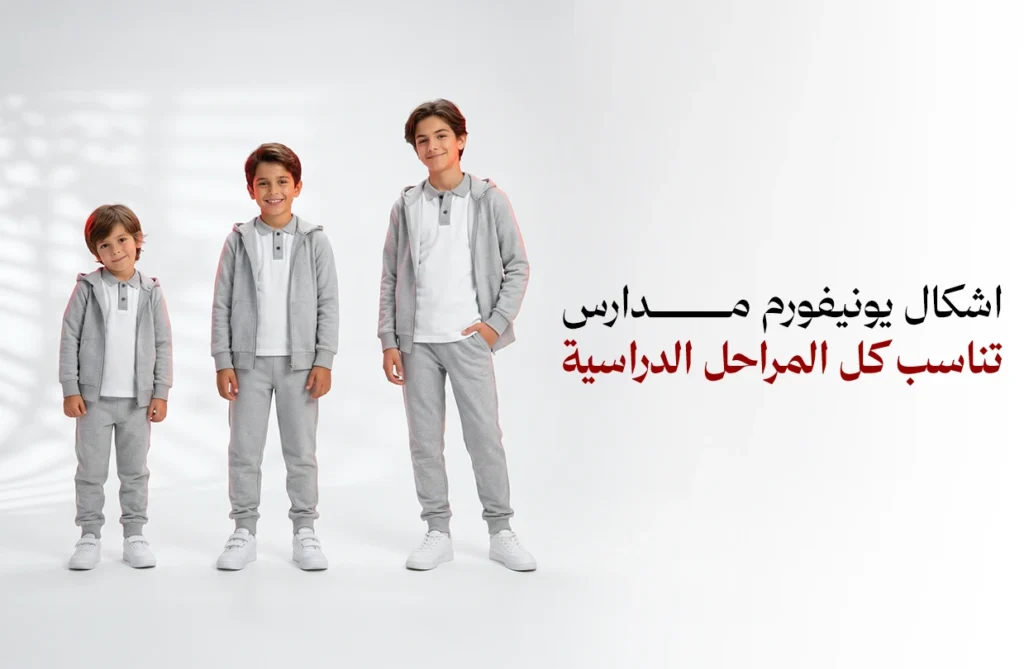
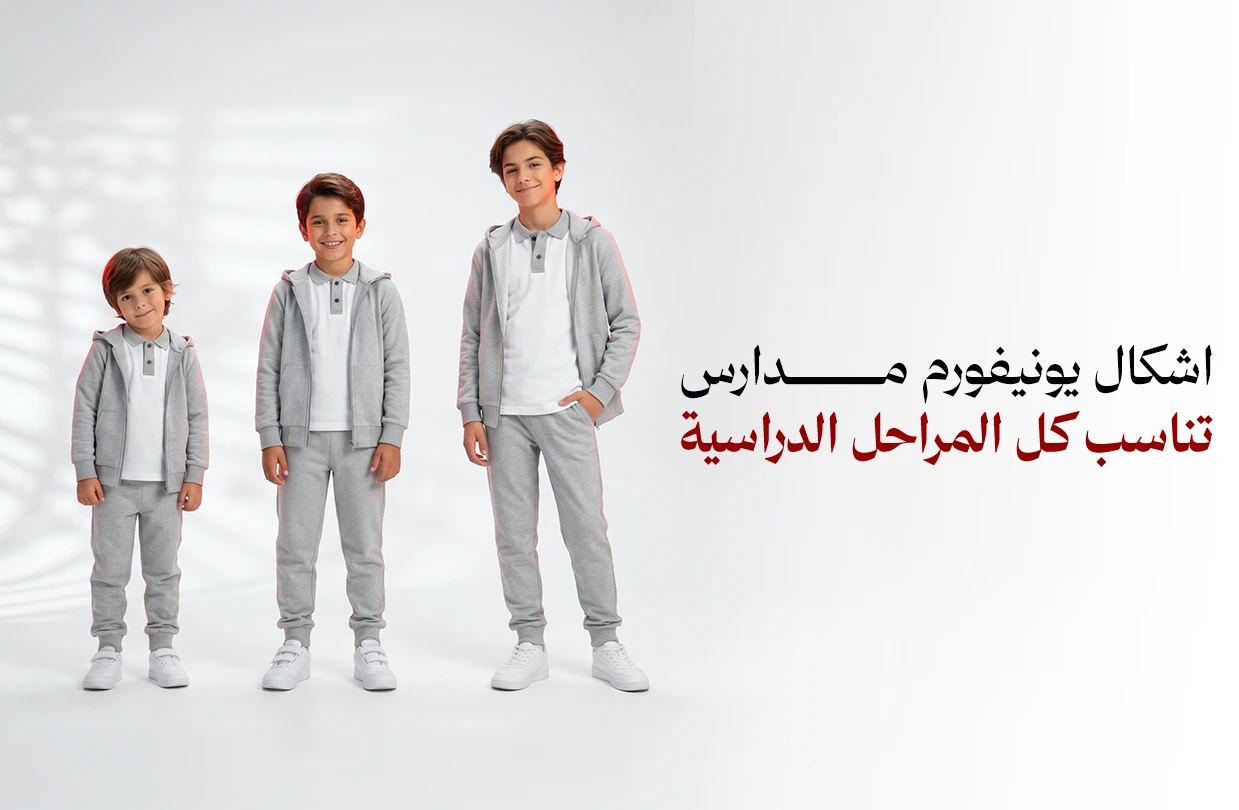
How Should Uniform Designs Change by School Stage?
| Stage | Suitable Style | Why |
|---|---|---|
| Kindergarten | Simple T-shirt or polo | Easy to wear and move in |
| Primary | Polo with trousers or skirt | Practical for active days |
| Middle School | Shirt or structured polo | Balances comfort and formality |
| Secondary | More understated formal design | Better suited to older students |
What Fabrics Work Well for School Uniforms?
Cotton
Comfortable and breathable, particularly for garments worn directly against the skin.
Poly-Cotton
Practical, durable and generally easier to care for.
Piqué
Frequently used for polo shirts because it maintains a structured appearance.
Gabardine
Suitable for trousers, skirts and garments requiring greater durability.
Blended Fabrics
Can help reduce wrinkling and simplify washing and ironing.
For more information about samples, fabrics and manufacturing, read our
custom school uniform guide.
How Should Schools Plan Uniform Sizes?
- Use a clear size chart.
- Provide fitting samples where possible.
- Avoid age as the only sizing method.
- Check garment length, sleeves, shoulders and waist.
- Allow comfortable movement and growth.
- Provide a sufficient range of sizes.
- Plan for special sizing requirements.
Modern or Classic School Uniform?
| Style | Suitable For | Example |
|---|---|---|
| Modern | Schools wanting a clean contemporary look | Polo, simple details and understated colors |
| Classic | Schools preferring a formal appearance | Shirt, sweater and classic trousers |
| Hybrid | Schools wanting comfort and formality | Smart polo with jacket or vest |
Where Should the School Logo Be Placed?
- Chest.
- Sleeve.
- Polo shirt.
- Jacket.
- PE uniform.
Printing vs Embroidery
| Area | Printing | Embroidery |
|---|---|---|
| Detail | Good for complex colors | Strong for clear logos |
| Appearance | Lightweight | Premium and structured |
| Cost | Often lower | Usually higher |
| Durability | Depends on the printing method | Generally strong |
| Best use | T-shirts and sportswear | Shirts, polos and jackets |
Common School Uniform Design Mistakes
- Choosing fabrics that do not suit the climate.
- Prioritizing appearance over comfort.
- Using too many colors.
- Selecting colors that show dirt too easily.
- Creating designs that are difficult to reproduce.
- Using overly tight sizing.
- Skipping sample approval.
- Placing the logo in an impractical position.
- Ignoring differences between age groups.
What Makes a School Uniform Comfortable?
- Soft fabric.
- Good breathability.
- Freedom of movement.
- Practical sizing.
- Comfortable sleeves and collars.
- Durability through repeated washing.
- Reliable color retention.
- Easy dressing for younger students.
- Season-appropriate fabrics.
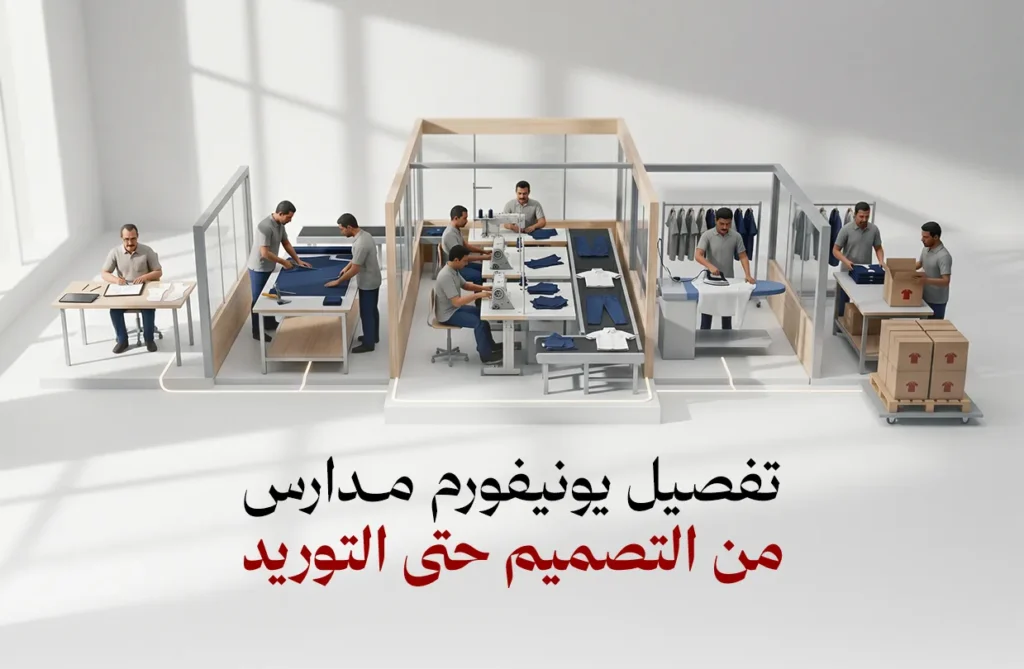
Why Use One Supplier for Design, Manufacturing and Supply?
- Keep fabrics consistent.
- Maintain matching colors.
- Standardize cuts and sizing.
- Keep logo execution consistent.
- Simplify repeat orders.
- Reduce coordination problems.
- Manage the project from design to delivery.
If you are evaluating suppliers, read our
guide to choosing a school uniform manufacturer
.
Conclusion
Successful school uniform designs begin with understanding the school’s identity and students’ needs, followed by decisions about colors, garments, fabrics, sizing and branding. The strongest designs are not necessarily the most complicated. They are comfortable, recognizable, durable and easy to reproduce.
Explore
Toli Uniform’s school uniform services
for support with design, manufacturing and supply.
Frequently Asked Questions
Can school uniforms be manufactured in smaller quantities?
Should schools have summer and winter uniforms?
How long does a complete school uniform order take?
Can the uniform design change after sample approval?
Does the logo need to appear on every garment?
Can different school stages use different uniform styles?
Create a Uniform That Represents Your School
The Toli Uniform team can support your school with design, fabrics, sizing and manufacturing.